
Bajorat Media
What is conversion tracking?
Conversion tracking measures which website actions lead to inquiries, purchases, bookings or other goals.
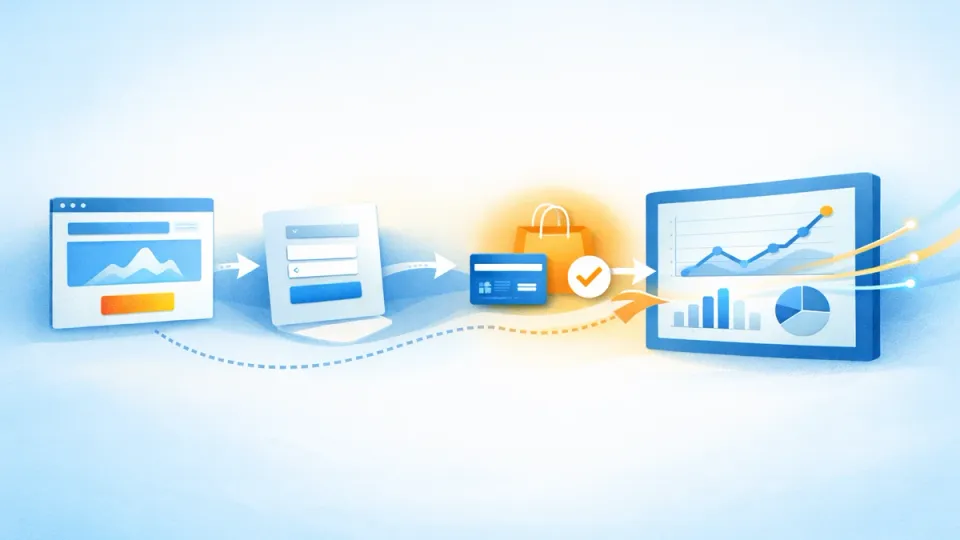
Conversion tracking is the measurement of important goal actions on a website or in a campaign. A conversion can be an inquiry, purchase, appointment booking, download, phone call or newsletter signup. Tracking helps identify which channels, ads, pages and content actually lead to commercially relevant outcomes.
What counts as a conversion?
A conversion is not automatically a purchase. For many service providers and B2B companies, other actions are more important:
| Goal action | Typical context |
|---|---|
| form inquiry | contact, project request, quote request |
| purchase | online shop or digital products |
| appointment booking | consultation, demo, initial call |
| phone click | local services, consulting, support |
| download | white paper, checklist, product information |
| newsletter signup | lead nurturing and customer retention |
The decisive point is that the conversion fits a real business goal. A random button click is not a useful conversion if it does not represent a decision or progress.
How does conversion tracking work technically?
Technically, an action on the website is detected and sent to a measurement system. This can happen through Google Ads, Google Analytics, Matomo, a tag manager, server-side tracking or direct system integration. Google’s documentation on conversion tracking explains that website conversions can analyze specific actions after an ad interaction.
In practice, events are often used. An event can fire, for example, when a form has been submitted successfully. It is important to measure the actual completion, not only the click on the submit button. Otherwise failed form attempts are counted as successful conversions.
Why is conversion tracking important for marketing?
Without conversion tracking, marketing often sees only reach, clicks and sessions. Those values are useful, but not enough for budget decisions. A campaign with many clicks can produce weak inquiries. A smaller campaign can bring less traffic but better leads.
For online marketing, conversion tracking is the connection between visibility and outcome. It answers questions such as:
- Which campaigns generate qualified inquiries?
- Which landing pages work?
- Where do users leave before the form?
- Which keywords or audiences bring revenue potential?
- Which channels are overestimated because only clicks are considered?
What do Consent Mode and privacy have to do with it?
Depending on the setup, conversion tracking processes personal or pseudonymous data. Consent, privacy notices, tag firing and provider configuration therefore need to fit together. Consent Mode can help Google tags account for the user’s consent status. A Consent Management Platform manages the user’s decision.
For website owners, the key point is this: tracking must not run fully before required consent has been given, if consent is legally needed. At the same time, the measurement logic should be built so it does not break whenever the form or cookie banner changes. This is where marketing, technology and WordPress data protection overlap.
Typical conversion tracking mistakes
Common problems include:
- firing the same conversion twice,
- measuring clicks instead of successful completions,
- not distinguishing between lead types,
- untested thank-you pages or form events,
- blocked tags without a clear consent concept,
- no separation between micro and macro conversions,
- no comparison with CRM data or real inquiries.
Google Analytics documentation on key events and Google Ads conversions describes how important Analytics events can be used to create Google Ads conversions. Here too, the events must be defined correctly from a business perspective.
What should companies measure first?
The best starting point is a small, reliable measurement structure. For many SMEs, a few core conversions are enough at first: contact request, project request, appointment booking, purchase or qualified download. Supporting signals such as scroll depth, CTA clicks or video interactions can be added once the core setup is stable.
Conversion tracking should not collect as much data as possible. It should enable better decisions: which measures create inquiries, revenue or qualified contacts, and which only look good in surface-level metrics?