Bajorat Media
What is Search Intent?
Search intent describes the purpose behind a search query. This article explains intent types, SEO relevance and practical analysis.
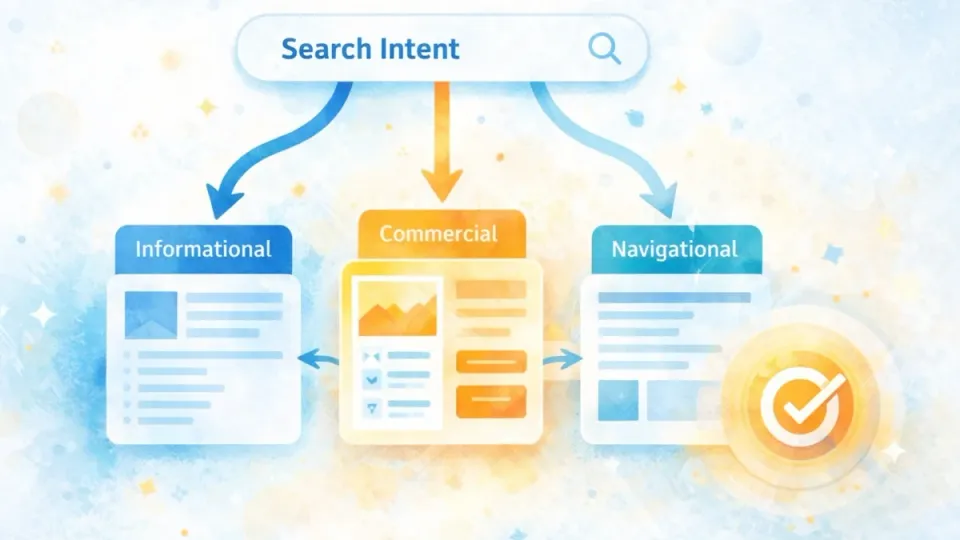
Search intent describes the purpose with which a user enters a search query. For SEO, this purpose matters more than search volume alone, because only content that matches the intent is truly helpful and can lead to inquiries, purchases or other goals.
Which types of search intent are common?
SEO practice often distinguishes four intent types. Informational means that someone wants to understand or look up something. Navigational means that a specific brand, website or page is being searched. Commercial describes research before a decision. Transactional indicates a clear action such as buying, booking, downloading or sending an inquiry.
These categories are orientation aids, not rigid boxes. A search for a technical term can be purely informational. A comparison query can already be close to a decision. Good search engine optimization recognizes this difference and plans content accordingly.
Why is search volume not enough?
A keyword with high search volume is not automatically valuable. If the search intent does not fit the offer, visibility may be created, but little business value follows. A company page that tries to sell immediately on a purely informational query disappoints users. A guide page that ignores a clear purchase or project intent also loses potential.
For SEO copy and editorial content, this means: the article must meet the expectation created by the search. For a what-is question, the clear explanation comes first. For a comparison query, users expect decision criteria. For a service inquiry, trust, process and contact options matter more.
Content planning should therefore not end with a long keyword list. For every relevant keyword, the page’s task has to be clear: explain, compare, deepen, sell, support local visibility or build trust. Only then does the right page type become obvious.
How can search intent be identified?
The simplest starting point is SERP analysis. By looking at the current search results, you can see which content types Google considers suitable for a query: glossary articles, guides, product pages, local providers, videos, comparison pages or shops. Titles, snippets and related questions also show which subtopics users care about.
The goal is not to copy existing results blindly. Search results show the expectation, but a strong article still needs its own professional perspective. This is where E-E-A-T, sources, experience and clear structure become important.
What does search intent mean for content planning?
A website should not create an isolated page for every keyword. A clearer content architecture is stronger: service pages for concrete project intent, blog or glossary articles for explanation and research questions, case studies for trust building and internal links between these levels.
Search intent also helps avoid keyword cannibalization. If two pages serve the same intent, they compete with each other. If each page has a clearly defined task, the whole content system becomes stronger. Google’s Search Central guidance on helpful content also emphasizes content written for people and their actual needs.
For companies, search intent is also a prioritization tool. Informational glossary articles create reach and trust. Service pages serve concrete project intent. Guides and cases support the decision phase. When these levels are internally connected, individual articles become a stronger topic cluster.