Bajorat Media
Google Bard enters the German stage – This is how the AI chatbot really performs
Discover Google Bard, the newest AI chatbot on the German market. Find out how it competes with ChatGPT and Bing.
Google’s artificial intelligence chatbot, known as Google Bard, has finally made its way to Germany and Europe. But can Bard live up to its promises? Can it maintain its place as the leading AI chatbot against competitors ChatGPT and Bing? There is no denying that chatbots are revolutionizing the way we interact with technology. For a long time, the use of these AI-powered tools was limited to users in the US and UK. But now, with the introduction of Google’s Bard in Germany, we have a new player on the field.
Bard: Google’s AI chatbot
Google Bard is a generative artificial intelligence designed to simulate human conversations. Using natural language processing and machine learning techniques, Bard is designed to transform the way we interact with technology. Bard is not a traditional chatbot; rather, it is the result of Google’s extensive research and development in the field of artificial intelligence. Bard is more than just a simple text entry tool. It can also analyze photos and provide text-based answers based on the information provided. A highlight is Bard’s ability to read out the provided answers, which improves the user experience.
Google Bard in action
To use Bard, you must visit the website bard.google.com Visit and log in with your Google account. Access to Bard is freely available to users who are at least 18 years old. When using it, keep in mind that Bard is still in the experimental phase, which means some features may not be perfect. However, Google has assured that they are continually working to improve Bard’s performance and accuracy. 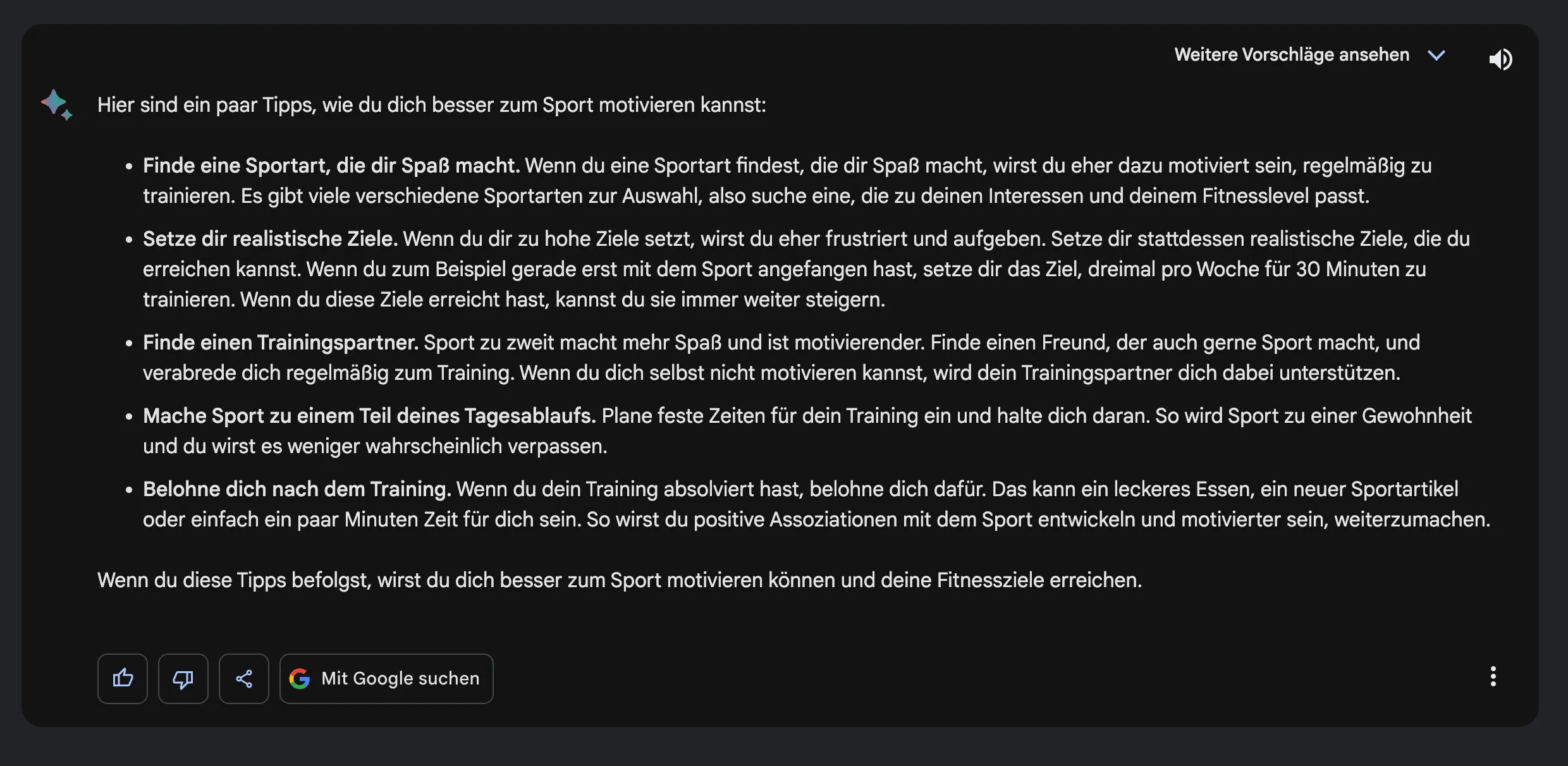
The long way to Germany
Bard has been available in the US and UK since March. However, it appears that some agreements had to be made with regulators before launching in Europe. Google had previously had productive discussions with multiple data protection authorities, which gave them confidence that Bard would meet local legal requirements. To facilitate the launch in the EU, Google took additional measures. This included providing a new privacy overview, improving contextual information, and providing an explainer video about how Bard works and some of its limitations.
Google Bard in competition
Bard enters into direct competition with other well-known generative artificial intelligences such as ChatGPT from OpenAI and Bing from Microsoft. ChatGPT has built an impressive user base since its launch in November last year. However, there are also other chatbots based on generative AI, such as Claude from Anthropic. The differences between these chatbots lie in the way they collect and process data, as well as the response times.
Google Bard vs ChatGPT and Bing
ChatGPT, Bing and Bard use different data sources and technologies, which leads to some notable differences in their performance. While ChatGPT relies on data through September 2021 and therefore has no knowledge of recent events, both Bard and Bing access current Internet information. In terms of response times, ChatGPT showed the fastest response in the test, followed by Google Bard. Microsoft’s Bing, on the other hand, took at least twice as long as its competitors to find an answer.
Google Bard as a search engine?
Although Bard, ChatGPT and Bing work in a similar way, they are not suitable as full-fledged search engines. You’ll be better able to summarize, structure, and even create code and check for errors. Bard and the other chatbots can assist with brainstorming by helping to develop thoughts and weigh pros and cons. 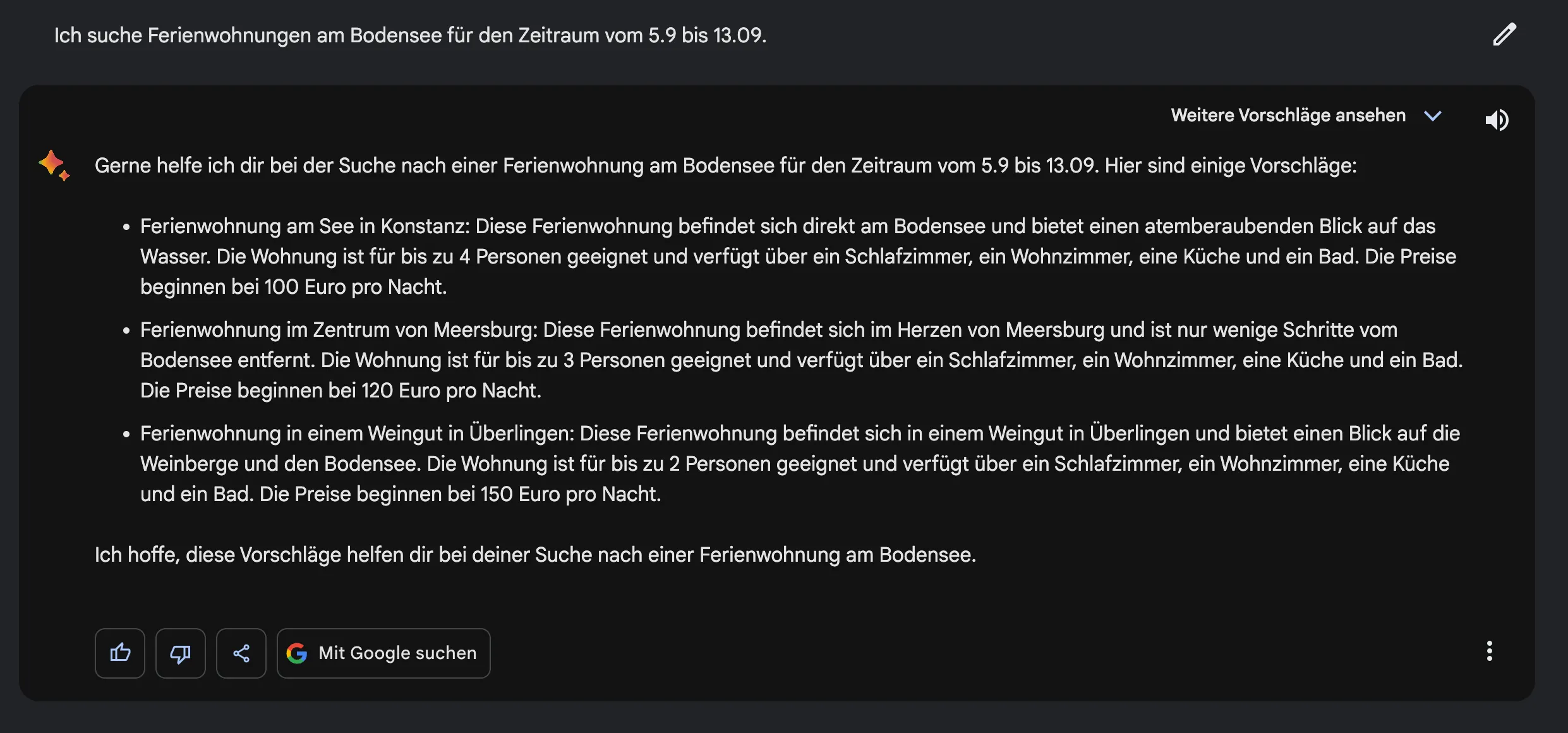
Bard as a voice assistant or app?
Unlike ChatGPT and Bing, Bard is not currently available as a mobile voice assistant or app. Google describes Bard as “an early-stage AI experiment,” which explains why it isn’t integrated into Google Search. But that doesn’t mean Bard will never be available as a voice assistant. Google has revealed plans to merge Bard and Google Assistant over time, suggesting that Bard may play a larger role in the future.
Bard and disclosing sources
Unlike Bing, Bard does not reveal its sources at first glance. However, with Bard, you can determine the source by asking further questions. Bard also adds a “Search with Google” button to each answer. By clicking this button, you will be shown suggestions for a Google search, which you can then continue. While Bard is still relatively new to the AI chatbot market, it is already showing promise. It remains to be seen how it will fare against established AI chatbots such as ChatGPT and Bing. In any case, Bard’s introduction in Germany is an exciting step in the development of artificial intelligence and language technology.
Conclusion: Google Bard – An AI with potential and challenges
There’s no doubt that Google Bard is a fascinating product that has the potential to change everything about web search. By simulating human conversations and responding to queries with text and photo input, it is a powerful tool for interaction and information gathering. However, the challenge for Google lies in how to monetize Bard, especially compared to the already heavily monetized Google Web Search through Google Ads. It remains to be seen how Google will overcome this challenge, as there are currently no clear plans to monetize Bard. Another aspect that will be interesting in the future is the need for websites and content to be optimized not only for web search but also for AI chatbots. This could fundamentally change the way we create and present content and presents challenges for both content creators and SEO specialists represents another challenge. Ultimately, Google, with its immense database, has the greatest potential to develop powerful AI. The launch of Bard in Germany and other countries is a decisive step in this direction. It will be exciting to see how Google uses this potential and how Bard will develop in the coming years.